

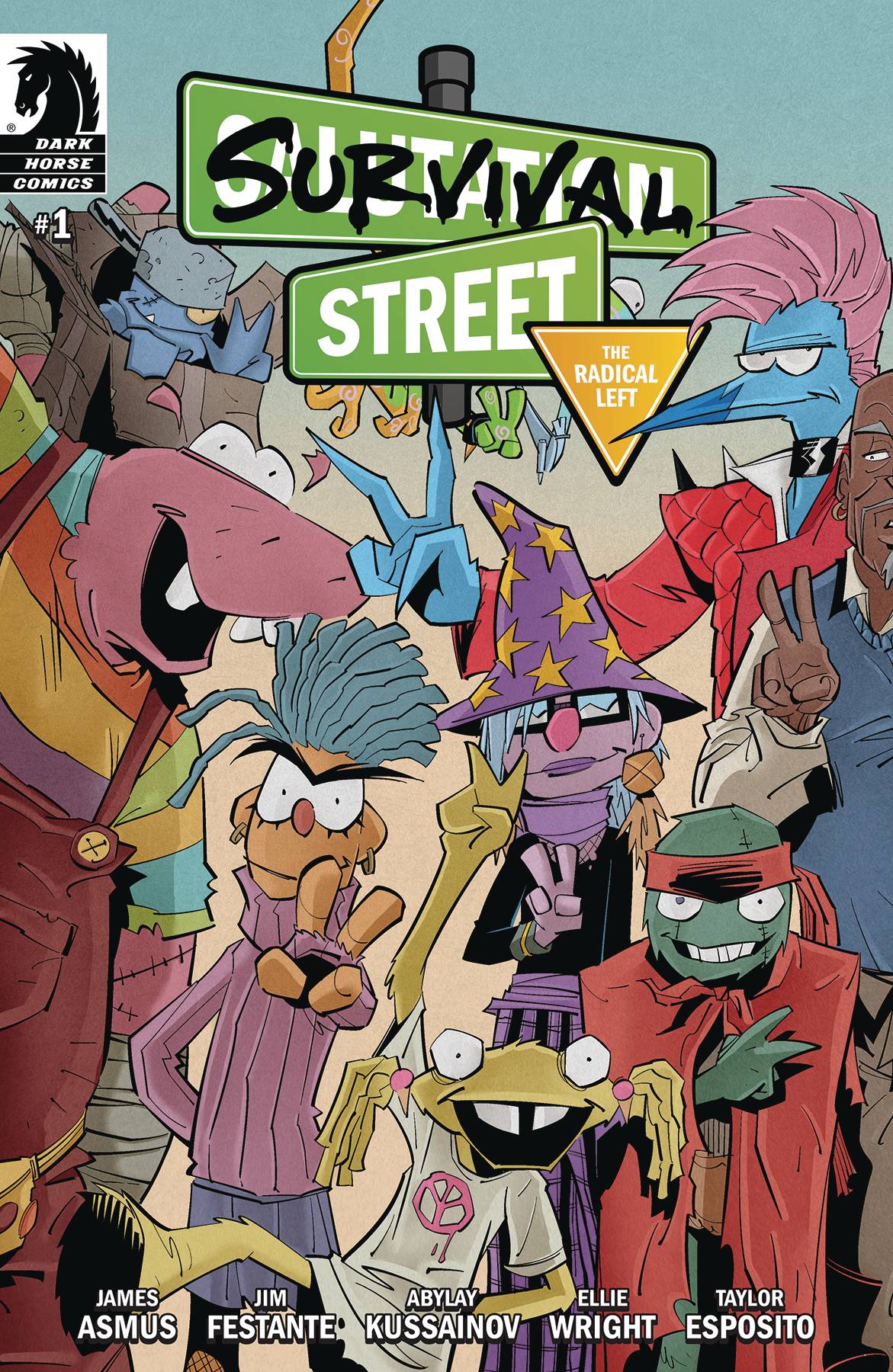
In 2024, Dark Horse Comics launched the long-awaited sequel to its culturally-minded and madcap miniseries Survival Street. Co-written by James Asmus and Jim Festante, with illustrations by Ablay Kussainov, colors by Ellie Wright, and letters from Taylor Esposito, the original Survival Street is satire at its best. In the original story, in a bleak future in the United States, former fuzzy children’s entertainment stars must contend with oligarchs who have claimed their own little privatized fiefdoms in the U.S. The book’s protagonists target new company towns to save kids like the ones the Survival Street heroes once entertained on public television.
In the sequel series Survival Street: The Radical Left, the narrative focuses both on the continued fight against the evil companies that have a chokehold on the U.S. and looks at the greater mythology of the Survival Street puppets.
Back in 2024, I had the chance to speak with writers James Asmus and Jim Festante about the idea behind Survival Street: The Radical Left, the origin of the original series, how current-day politics and A.I. have influenced their books, and how much fun they had working on the comic.
Editor’s note: Due to technical difficulties, this interview was never published. Those difficulties have been rectified and the interview is being published here now, edited with considerations of the time that has passed between the interview and today.
FreakSugar: What can you tell us about the conceit of Survival Street: The Radical Left?
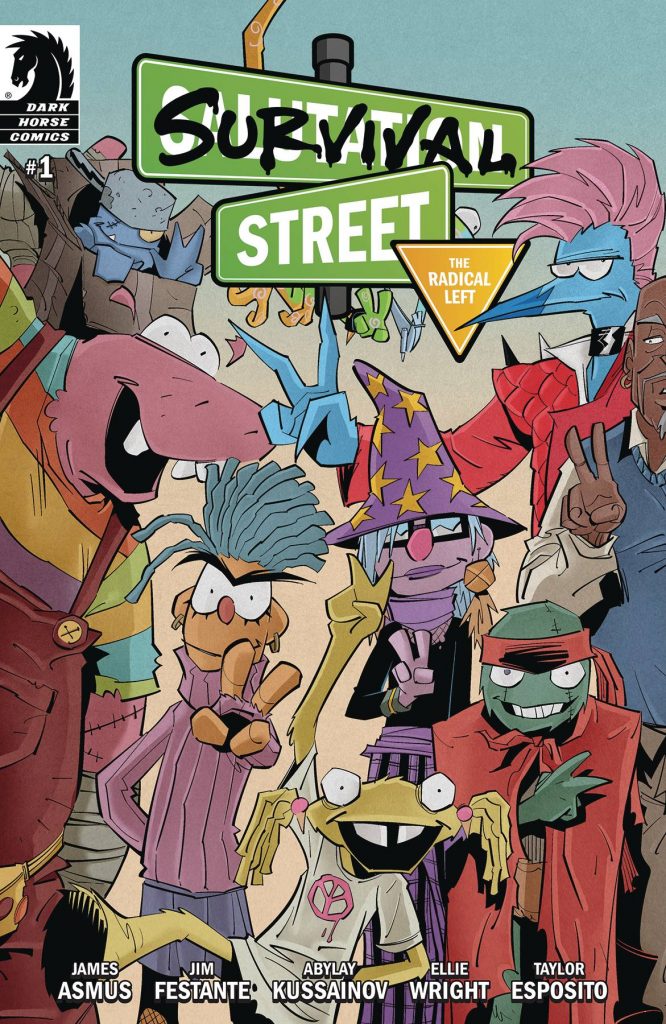
James Asmus: Survival Street is the adventures of fuzzy ex-children’s entertainment stars in a future where billionaires and companies privatized and divided up America amongst themselves. When public television was shut down, our heroes became an A-(B-C-)Team traveling the country to save kids from evil company towns. The Radical Left miniseries continues our ‘each issue is a new mission’ format, while expanding our scope to dig into conflicts and complications within ‘the Resistance’ – and explore more of our mythology around these living puppets. We were thoughtful to make the series new reader friendly, while rewarding ongoing fans by digging deeper and expanding the world.
FS: God, I love the cast of Survival Street. What can you tell us about the characters and where we find them in this new volume?
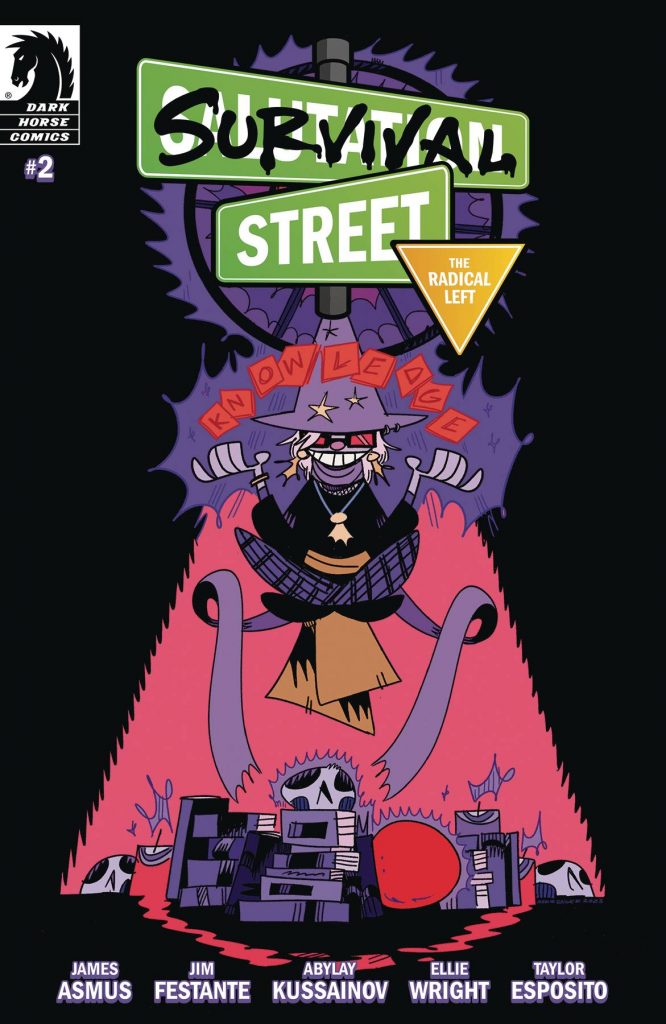
Jim Festante: Obviously our crew is back… and a little worse for wear. James and I were excited to explore not just people in their orbit (like Edward Snowman and former castmates from Salutation Street) but also fantastic creatures who also hail from the Snuffaluffagus Islands and then made their way to the mainland (like sports team mascots!). Without spoiling too much, issue two introduces a handful of ridiculous misfits from the olden days who might not exactly fit into modern entertainment standards.
FS: This is the first time we’ve spoken about Survival Street. What was the genesis of the series?
JA: During pandemic lockdown, Jim and I were looking to create a next original project that could let us tackle all (or at least a lot) of the mounting horrors and anxieties we had about Where The World Is Headed. We keyed into exploring a world where corporate lobbyists get everything they want, and essentially divvy up America into privatized ‘company towns’ where they can do whatever they want. But we didn’t have a core story, or any idea about our puppets yet.
JF: It was originally just a joke when we were world-building that ‘of course, they’d close PBS so the very real creatures who make children’s television would be out of a job’. But it struck us almost immediately that those kinds of characters would actually make the perfect counterpoint heroes in that world – as they embody sharing, compassion, community, education, and so many more humane values.
JA: The rest just clicked into place almost immediately. They would try to save kids from a different type of doomsday capitalism each issue. Survival Street is inspired just as much by the ‘traveling hero’ shows of the 70s and 80s like A-Team, Knight Rider, Quantum Leap, The Incredible Hulk and others. And the characters are blends of puppet influences, or archetypes, but mixed with classic ‘mission team’ types like ‘the loose cannon,’ the ‘undercover guy,’ the ‘brains of the operation,’ — but all given their own absurd hook or comedic game you’d hope for in big, colorful puppet characters.
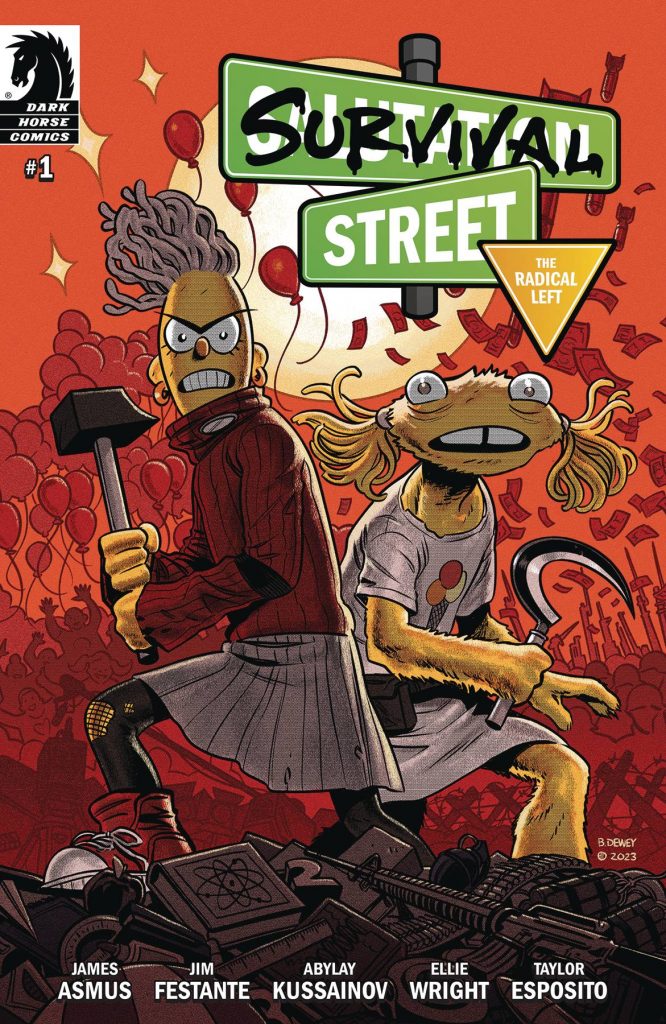
FS: Given our political climate, I feel like this book is more timely and more needed than ever. What are you hoping readers take away from the comic?
JF: That even though things are wildly stacked against our favor, “think globally, act locally” has never been more important. You can’t make huge systemic changes overnight, but you can become more involved in your own community and neighborhood to make a difference.
FS: The world in general and the comic industry in particular is in a weird place with A.I. right now, with theft of the work of others becoming increasingly common. Do any of your opinions on A.I. slip into your story?
JA: Oh, we definitely get into it! There’s some bits peppered throughout, but issue #3 in particular puts the issue front and center. We let Chat GPT write the SOLICIT for that issue (and credited it as such), but that tongue-in-cheek use is there as our red flashing light on all the small ways our industry is at risk of being carved up bit-by-bit and automated.
FS: The book is so kinetic and beautifully paced. What has the collaboration process been like with the creative team?
JF: A dream, truly. Abylay (Kussainov)’s storytelling is so wonderful, the emotion and action he’s able to get onto the page are top-notch and to be perfectly honest, I’m surprised no one has stolen him away from us. Ellie (Wright)’s colors have become even bolder and more exciting somehow, and Taylor (Esposito)’s lettering continues to tie everything together in a cohesive and wonderful way.
FS: You all seem like you’re having a blast doing the book. What’s been your favorite part working on the series?
JA: Really, my favorite thing is just this creative nexus at the heart of the series – exploring any and all of our real-world anxieties through this absurd-but-sincere funhouse mirror, then seeing it brought to life by incredible collaborators like Abylay, Ellie, and Taylor. It turns the things that can feel overwhelming into something cathartic, joyful, and energizing.
FS: What are you reading right now?
JA: Well my comic shop pull-list includes What’s The Furthest Place From Here, Local Man, pretty much anything Mark Russell writes, The Power Fantasy, Oni’s new EC comics line, Skybound’s Transformers and GI Joe books, and The Pedestrian. I’m also finally reading The Princess Bride novel, a nonfiction book about bogus medical ‘cures’ and treatments through history (Quackery), and recently finished (and loved) comedian Jena Friedman’s book of essays Not Funny – which I would totally recommend to fans of Survival Street.
JF: I’ve been getting back into novels lately! Lev Grossman’s “The Bright Sword” is a must for Arthurian fans and his “Magicians” series is also top-notch: fantastic storytelling, honest character development, he does it all and I love him for it.
FS: If you had a final pitch for the book, what would it be?
JF: If you’re getting squeezed by hyper-capitalism, want a fun read (that still means something), and/or could use some puppet joy/chaos — you should call or email your comic shop right now and ask them to get #1 for you. We put a ton of love, work, and thought into making sure it’ll be worth your dollars. And you’ll be supporting real creators, not bots or mega-corps!
The Survival Street: The Radical Left trade paperback is on sale now from Dark Horse Comics.
From the official trade paperback description:
The political satire action-adventure hit series returns!
After America is sold off to private companies, this A-B-C-Team of ex-entertainers rescues kids from cruel company towns. But Portland can’t hold everyone, and the cracks are about to break… Prepare for a radical departure in the series Library Journal called a “blisteringly satirical mash-up of Sesame Street and Robocop.”
A candy coating of pop culture madness, humor, cartoonishly absurd hyper-violence, and just enough hope to keep holding on.
Collects Survival Street series II #1-#4.