
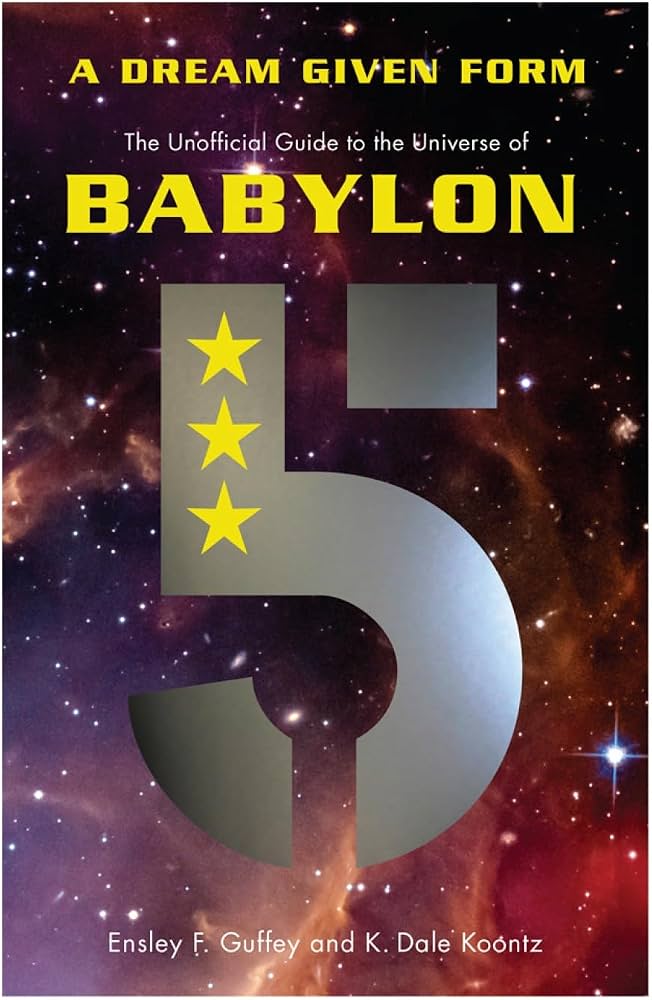
Back in 2017, married writer duo Ensley Guffey and K. Dale Koontz published A Dream Given Form: The Unofficial Companion to Babylon 5, celebrating the television series that, as Guffey puts it, “changed the face of American television.” Guffey is a former writer for FreakSugar who penned the wonderful war comics-centric column “C’est la Guerre.” Prior to the publication of A Dream Given Form, Guffey was kind enough to do an interview about the book and his FreakSugar column. Due to technical difficulties, this interview was never published. Those difficulties have been rectified and the interview is being published here, edited with considerations of the nearly ten-year gap between the interview and today.
FreakSugar: I’ve known you for quite a while and know your love for war comics. How did your love for the genre develop?
Ensley F. Guffey: It began in the best way possible: I’m old enough that, as a kid, I used to go into the local newsstand and browse the comics spinner-rack, which always seemed to have issues of G.I. Combat, Sgt. Rock, The Unknown Soldier, etc. These were great comics for a young reader because they almost always had a complete story in one issue, so it didn’t matter if you missed an issue or three – you could jump right in.
Later, as an older reader I began to wake up to the art in those comics, which was often by some of the biggest names in the industry: Joe Kubert, Russ Heath, George Evans, Alex Toth, John Severin, etc., etc. Their work really influenced my taste in sequential art styles across all genres. Then there were the writers: Robert Kanigher, David Michelinie, Archie Goodwin, and so on. All of these guys were incredible, and let’s not forget Tatjana Wood, the woman who taught me to pay attention to colorists!
Ultimately, I began to see past the cool heroics and slam-bang action to the fact that the best war comics, and over the years a lot of them came out of the big publishers, were really making some powerful statements about how war twists things and people in strange and horrific ways. Moreover, the creative teams were using these comics to tackle contemporary issues head on: racism, nationalism, wartime atrocities by the “good” guys, and classism just to name a few. It really is an incredibly rich and rewarding genre.
FS: You have reported on a variety of war comic titles from throughout the years. What are some of your favorite war series, old and new?
EFG: Gotta lead with Our Army at War from DC, which became Sgt. Rock in 1977. From 1959 to 1988 Sgt. Rock and Easy Company headlined those books, and they are two of three series that I still collect, and that I’m always looking to fill holes in at cons. The Unknown Soldier has always been good for a grittier edge. Sam Glanzman’s USS Stevens stories are fantastic too. From across the pond, I love Johnny Red, Charley’s War, and Darkie’s Mob – great British war comics form the late 1970s and 1980s. In the modern era, it’s hard to go wrong with Garth Ennis, probably the main war-comics writer today, who works with some of the most incredible talent in the world. His Enemy Ace: War in Heaven (with Chris Weston, Christian Alamy, and Russ Heath) is a stand out, as his is recent Johnny Red: The Hurricane (with Keith Burns and Jason Wordie). Ennis is also writing the only ongoing American war comic series, War Stories, at Avatar Press.
It’s a genre that everyone dips into now and then though, including incredible works by Brian Azzarello (Sgt. Rock: The Prophecy), Billy Tucci (Sgt. Rock: The Lost Battalion, Star Spangled War Stories Featuring Mlle. Marie), Brian K. Vaughan (Pride of Bagdad and even a recent arc in Saga), the great manga master Shigeru Mizuki (Onward Towards Our Noble Deaths, Showa) – those are just off the top of my head!
FS: War comics have been around for decades, but sometimes don’t get the attention that they deserve. What would you want readers to know about the genre so that they might consider picking up a war comic?
EFG: War comics are a very humanist genre, and they examine humanity at our very best and worst – and show us how we got there. War comics also are very adept in using the past (or the future!) to engage with and comment on the present, and have often been able to do so “under the radar” of the Comics Code and other sensors. I am regularly amazed what mainstream war comics were able to get away with at times.
FS: What about Babylon 5 made you two want to delve deep into those stories and characters?
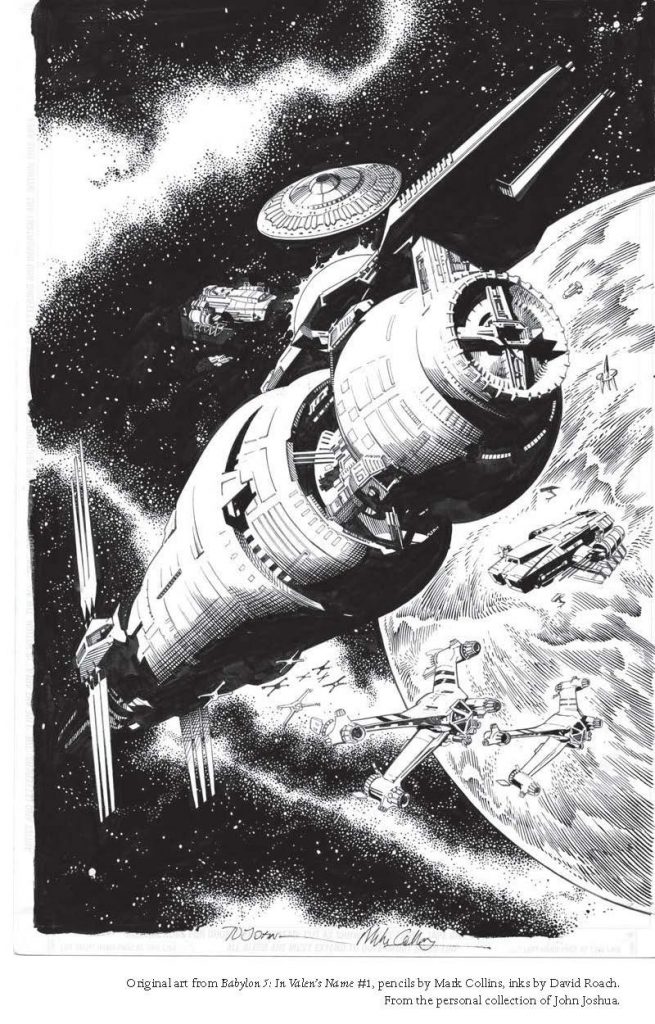
EFG: A Dream Given Form: The Unofficial Companion to Babylon 5[…]will be the first book to examine the main series, the Crusade spin off, all of the TV movies, the Lost Tales DVD, as well as the canonical novels, short stories, and comic books – all in one volume. It was a massive undertaking, but also an incredible amount of fun. As to why we did it, I’ve been a fan since Babylon 5 first aired in the mid-1990s and have always wanted to write about the show, and when the 20th anniversary kicked off in 2013, my wife and co-author, K. Dale Koontz, and I realized that this was the perfect time to revisit this show. Babylon 5 truly changed the face of American television, and the way that series are written and plotted. It really is a show that laid the fundamental groundwork for the golden age of TV we’re enjoying now.